
What can we know about Jesus?
Review of Miracles and Wonder: The Historical Mystery of Jesus by Elaine Pagels

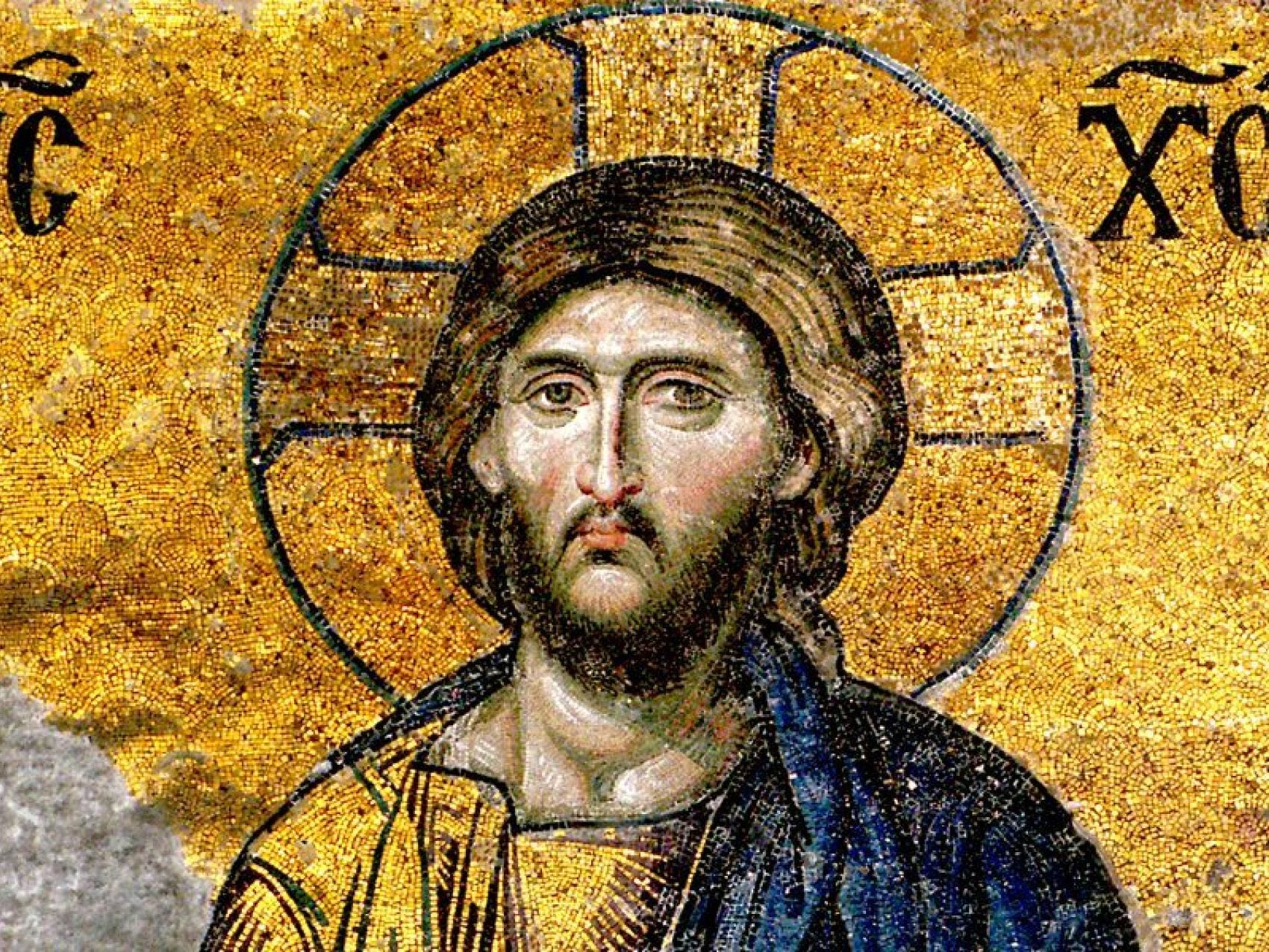
When you look into the life of Jesus, it is astonishing how little we can actually know. Paul, who was a near contemporary, never met him: his entire description, indeed the entire new religion, Christianity itself, is based on his supernatural vision or dream, in which Jesus instructed and empowered him. For their part, the four Gospels were written one or two generations after the death of Jesus, so none of the writers had had direct contact with him. Other sources include accounts that were not accepted into the canon, such as the Gospel of Thomas, but also the prophesies of the Old Testament. Finally, much of what Paul and the Gospel writers knew came from sayings and anecdotes that were passed down orally as well as in written forms that evolved with each telling. Unsurprisingly, these sources were wholly intended to spread the “Good News”, hence were not conceived as historical or biographical records.
Yet, as Pagels argues, the life and message of Jesus shaped our culture, our most intimate choices, even our personal thoughts – and they continue to do so. Why is this, she asks? What do Jesus and Christianity uniquely offer? Pagels has spent her entire academic career attempting to answer these questions.
Pagels begins with the peculiar conditions of his birth. An illegitimate birth, she informs us, would have been shameful in his time, perhaps even a death sentence for a traditional Jewish woman. It had to be explained, she argues, in a manner that would be palatable to the followers of Jesus and to local religious authorities. The Roman Army commonly raped or kept Jewish women; in some sources, a Roman soldier, Panthera, is mentioned as Jesus’ father. Furthermore, though Pagels doesn’t explore the notion in sufficient detail for me, Mary might not have been a virgin – the translation of Hebrew into the Greek Septuagint was ambiguous, that is, almah could also have meant “young girl” rather than virgin. The eventual solution, of course, was that God had gifted her with a child who would have some sort of holy identity or leadership role. While many of Jesus’ contemporaries found this explanation unlikely or ridiculous, it eventually served to explain his powers as a miracle. He uniquely stood out.
She next turns to the question, “who is Jesus”? There are any number of possible answers. Is he a healer and miracle worker empowered by God or some kind of fraud? Is he a prophet or insane? A revolutionary? A putative king? A messiah? A son of God or God himself? These are the questions that his contemporaries apparently asked about him. To address them, Pagels turns to the Gospels, in particular that of Mark. As “a devout Jew”, she says, Mark was intimately familiar with the Old Testament as well as the disparate scraps, anecdotes and hearsay related to Jesus; these enabled him to construct a narrative that portrayed Jesus as not just the fulfilment of the prophesies made in them, but also to recapitulate as analogies a number of sacred stories related to the fate of the Jews, such as the life of Moses. Moreover, as Pagels points out, many of the miraculous stories were ubiquitous in Mediterranean cultures of the time, including those of pagans, which lent a believable familiarity to them.
Unfortunately, Pagels fails to fully develop here what appears blatantly evident to me: this process is how myths are created, that is, combining traditional beliefs with immediately relevant circumstances, as in the desire for a religiously sanctioned liberation from the Roman occupiers. Jesus would, in that scheme, fulfill his God-given role as the anointed leader to do so. While the perspective of the book is painstakingly secular, I suppose this failure reflects Pagels’ personal belief in, or profound sympathy for, Christianity. As a respectful non-believer, this disappointed me. Indeed, many of the solutions to uncomfortable questions about Jesus seem to have been made on the fly, then morphed into mythology, frozen into stories that became orthodoxy later on.
The next issue she tackles is the definition of the Good News, the promised “kingdom of God”. As I see it, this apocalyptic concept could take three forms: the annihilation of the Romans as the price of freedom for the Jews; the end of the entire world as a prelude to God’s creation of paradise on Earth for the chosen; or finally, the creation of an “internal kingdom” within the mind and heart of the baptized, a way of redemption in faith that would allow the righteous to ascend to a heavenly realm. If crudely put, I see these as the interpretations that have dominated Christian theology ever since. Again, I think that Pagels’ perspective as a believer prevents her from presenting the sharper edges of these variations, repeatedly emphasizing love and hope, though she does mention that the flipside can generate hate of “the others”, the unbaptized, and eventually, the heretics.
Then of course, there were the crucifixion and resurrection. For many of Jesus’ Jewish followers, the crucifixion was the end of the story: he had failed to lead them into freedom and paradise. End of contract. Another failed rebel prophet in a long line of would-be liberators. To counter these doubts, Pagels asserts, his followers and soon Paul came up with a novel claim: Jesus had risen from the dead and revealed the secret to entering paradise. Pagels characteristically avoids making a concrete judgment of what really happened, but she mentions that there are two basic interpretations of resurrection: either Jesus was physically returned to life or, as Paul argued, he was transformed into some new entity, perhaps as divine thought (λόγος). “What seems to matter more,” she writes with typical elegance, “is the possibility that faith can challenge death’s finality, offering hope for a new life, not simply in some shadowy version of Hades but in an unimaginably glorious and joyful victory over death.”
This victory, she concludes, provides the key to the survival of Jesus’ teachings as well as to their ongoing appeal. Unfortunately, this is not enough for me. What was it about the historical context at that moment, in those times, that made Jesus’ life and teachings so appealing that they gradually spread into the Roman Empire and eventually all of Europe? I still cannot answer that question, the true mystery of Jesus.
After her solid introduction to the historical Jesus, Pagels turns to what Christianity means to the peoples who choose to follow it. While at times perilously close to theology, she comes up with an interesting, if far too brief, list based on conversations with anthropologists who study adherents. Some people enjoy a personal relationship with Jesus, a kind of ultimate fantasy friend in my view, a family member, a debate partner, even a lover. Others identify Jesus as a liberator and healer as well as a giver of comfort in the face of suffering, which sprang from his becoming human and suffering such an awful death. In his faith, he offered justice and hope. In his resurrection, he offered transcendence over death. Still others enjoy his philosophical complexity, a way of seeing the world imbued with meaning that they can sometimes, though not always, discern and pray to change. Finally, she throws in some thoughts on his portrayal in art, a section so superficial and stilted that it barely merits mention.
The one take away from this book, at least for me, is that we can never know the truth about Jesus – who he was, what he wanted, how he (or Paul) accomplished the founding of the world’s largest religion. He became the vessel of a new kind of mythology, bringing hope and certainty. The only thing we can know is how his followers attempted to explain his life, often improvising stories that became accepted as the ultimate truth, as articles of faith in a cruel and confounding world. I cannot, of course, offer anything but my opinion as a rationalist, non-believer. In spite of my criticisms, Pagels is a great writer and scholar. She gets the reader to think, to see the world at that pivotal time and come away with new questions.
Related:
How Paul created Christ

Tabor essentially argues that Paul, who never met Jesus, is responsible for the transformation of what was a Jewish messianic movement into something very different and explicitly for gentiles, i.e. a Graeco-Roman audience, as it came to be enshrined in the New Testament. The spirit of Jesus, it seems, talked to Paul, leaving him with a vision - and det…
Jesus as a fanatical rebel against the Roman occupation

Reza Aslan's Jesus is essentially a Jew of his time, concerned with Rome’s military occupation of his homeland, in spiritual crisis about the direction his faith was taking, and in search of a new political way. His words and teachings were directly addressed not to humanity as a whole, but solely to those of his faith, the Jews. In other words, accord…
Judaism + Hellenism = Christianity

If you are interested in where Christianity came from – not a theological perspective but an historical one – this is an absolutely excellent place to start. Though the text assumes a fair amount of knowledge, it is a solid platform for a popular audience that is curious about what academics would make of the subject. The autho…
Confluence from which Jesus emerged

The purpose of this book is the illuminate the 300 or so tumultuous years in Palestine prior to the common era (CE), a confluence of political, cultural, philosophical, and theological issues that range from essential and basic to indescribably obscure. The “crucible era”, as Jenkins calls it, forged the theological building blocks of what would become …
God, society, and change

Robert Wright likes to take on the big questions. In this book, he looks at God, or rather, how God has evolved in the minds and institutions of men. There are a few basic ideas he wants to get across. First, he explores how the conception of God – as wrathful and intolerant or as promoting universal brotherhood, etc. – evolved in res…
Basically Christianity could be all made up and Judaism is even worse with provable historical records. That’s why Buddhism makes the most sense. We know the Buddha was a real person, have a reliable historical record of his life and his teachings were recorded in his lifetime so there is no confusion about what he meant. It’s time to accept Christianity is lazy, intellectually and from a theological perspective. To be human is to make mistakes and while Christianity asks nothing but acknowledgement and external forgiveness Buddhism requires you to do better, to balance the bad karma you put out into the world and do better. Christianity is a faith of children looking to their sky daddy for approval, Buddhism requires you to own your actions and do better like adults do.