
Capitalism's Permanent Revolution
Review of Capitalism: A Global History by Sven Beckert (part 1)

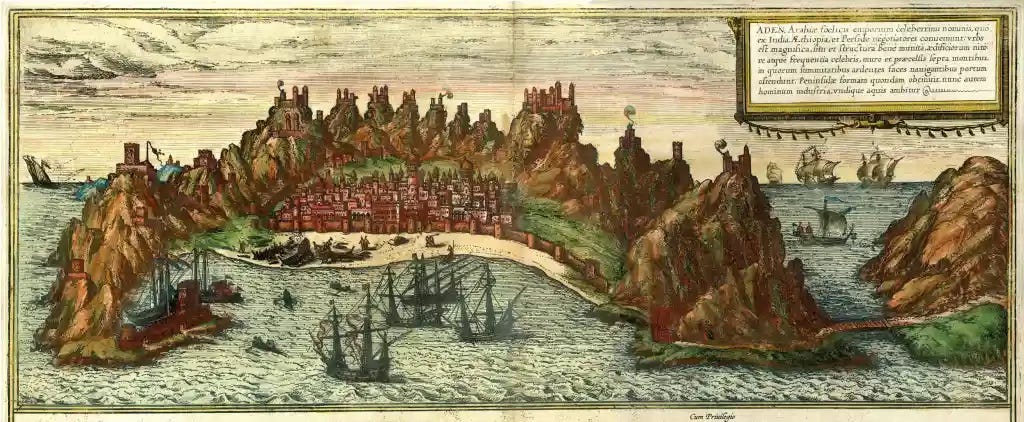
Capitalism relentlessly pushes boundaries, seeking new markets in unexploited areas of desire and need, foreign venues, and in our personal lives. It has even colonized our vocabulary – we “market ourselves”, “invest in friendship”, and “spend time”. Nonetheless, in his brilliant history, Sven Beckert argues that there is nothing inexorable or natural about it, that it is man made and continually faces resistance, which tends to be met with violence and the force of imposed law. Yet at the same time, capitalism has become so ingrained in our society that we no longer recognize it as the revolutionary departure it represents. Our minds, he believes, have calcified into assumptions that we barely understand are ideological – capitalism is not preordained by human nature. “We are immersed in capitalism,” Beckert writes, “like fish in water.” The purpose of his book is to explore the nature of capitalism through its history so that we can understand and then better manage it.
According to Beckert, capitalism has 4 components. First, we organize our lives around the “ceaseless accumulation of privately controlled capital”, including productive investment in labor, technology, and institutions – wherever opportunities are perceived and can be exploited. It is an addiction to growth at any cost.
Second, it operates exclusively in economies in which both inputs and outputs are sold in markets, that is, treated as commodities available for a price.
Third, capitalism depends on the active support of the state, which sets its rules, enforces them, and controls the distribution of resources. The state and capitalism, in Beckert’s view, are symbiotic and self-reinforcing.
Fourth, capitalism is dynamically “demarcated”, constantly redefining its practices and reach into new spheres of life; it “subsumes other [economic and social] logics into its reproduction…feeds on them and at times even reinvigorates them” (p. 21). Beckert emphasizes that capitalism is not a thing or event confined to a specific location, but a global process. In this way, he believes, capitalism doesn’t have a single place or time of origin, but gradually emerged from a network of merchants operating in cahoots with their states. It is also mercurial and in permanent revolution, hence adaptive and flexible rather than dogmatic.
The social system that capitalism eventually replaced was the tributary economy. In the pre-capitalist era, Beckert states, the bases of wealth and power were land ownership: elites extracted wealth from the peasants they controlled as slaves or serfs; war booty was also important. For all intents and purposes, markets did not exist. Labor was under elite command and consisted of social obligations to produce food or undertake tasks (the corvée) to address local needs, such as clearing land or building roads. Merchants were viewed strictly as political subordinates, somewhat morally unsavory, but to be relied upon in war as well as to obtain goods that could not be supplied or manufactured locally. Religious authorities and higher lords provided minimal oversight, principally to claim resources for their own purposes. Economic growth remained extremely slow, at the subsistence level. Social relations were largely coercive and rigidly hierarchical by birth, with scant opportunity for personal advancement. Society and the economy were essentially autarkic, local, and static.
Things started to change around 1,000 CE. According to Beckert, merchants in Yemen and India established two “islands of capital”. Starting as a trade missions – summer to India, return in the fall when the winds changed direction – these merchants developed “qualitatively new, emergent abilities” in organization and accounting, moving far beyond anything that individual exchanges could accomplish. They kept precise records of the goods stored on their ships, the contents of which they officially reported to the governor. Then, the goods were taken to customshouses for formal inspection and duties. To spread risk, sedentary merchants created partnerships of shareowners and began to invest in local production of textiles, ships, and other manufactures. In addition, they developed networks of relationships and then institutions to facilitate exchanges, including separate systems of law for contractual obligations, dispute resolution, tax collection, the pooling of capital, and security. While flexible and often informal, Beckert believes, these institutions represented embryonic states. Sedentary merchants, he concludes, were emerging as the first capitalists, that is, they became “[u]niquely reliant on the investment of capital for their power, they embodied its logic of ever continuing expansion” (p. 37).
In stark contrast to landed elites, they were nimble and embraced change. Of course, beyond traditional religious objections to usury as sinful and disdain of trade as lowly and illegitimate, the old elites began to fear the growing power of the merchant nouveau riche, who were building magnificent cities and only beginning to demand higher political and social status. Furthermore, the artisan class opposed the import and manufacture of competitive substitutes. These represented the earliest instances of resistance to the revolutionary opportunities opening up: they were breaking norms and forging networks on a scale that had not been seen since the Roman Empire. That being said, while their power was growing, Beckert notes that the merchants of this early period (to the early 17th century) remained on the periphery of high society – interlopers rather than members of the elite, more akin to pillagers or pirates. The tributary economy remained overwhelmingly predominant.
Though far behind, European and Chinese merchants began to take notice and gradually adopted many of their methods. This opened the era of exploration and the discovery of the Americas. While merchants predominantly traded luxury goods, such as spices and textiles, the growing exchange of agricultural resources and techniques soon hugely enhanced productivity, creating additional surpluses to invest.
Beckert’s perspective seeks to balance the unprecedented creation of wealth and output that the capitalist system generated with the violence, exploitation, and unimaginable suffering that accompanied these developments. As we will see, while innovative, the capitalists’ search for new ways to generate profit was relentless and increasingly cruel. In its early stages, it would culminate in the Atlantic slave trade, the establishment of the plantation system for sugar and tobacco, and the trade network that would later finance industrial capitalism.
Though I had originally intended to critique Beckert’s massive book in a single review, it is so rich in detail that I have decided to treat it in several installments. They will cover the establishment of a global merchant capitalism along with the proto-modern state by 1750; the rise of industrial capitalism as a new civilization to 1870; global rebellion and reform to 1970; and finally, the neoliberal period and the unresolved crises that we now face.
Related: